
Why Your Basketball Shoes Slip, and What Actually Helps
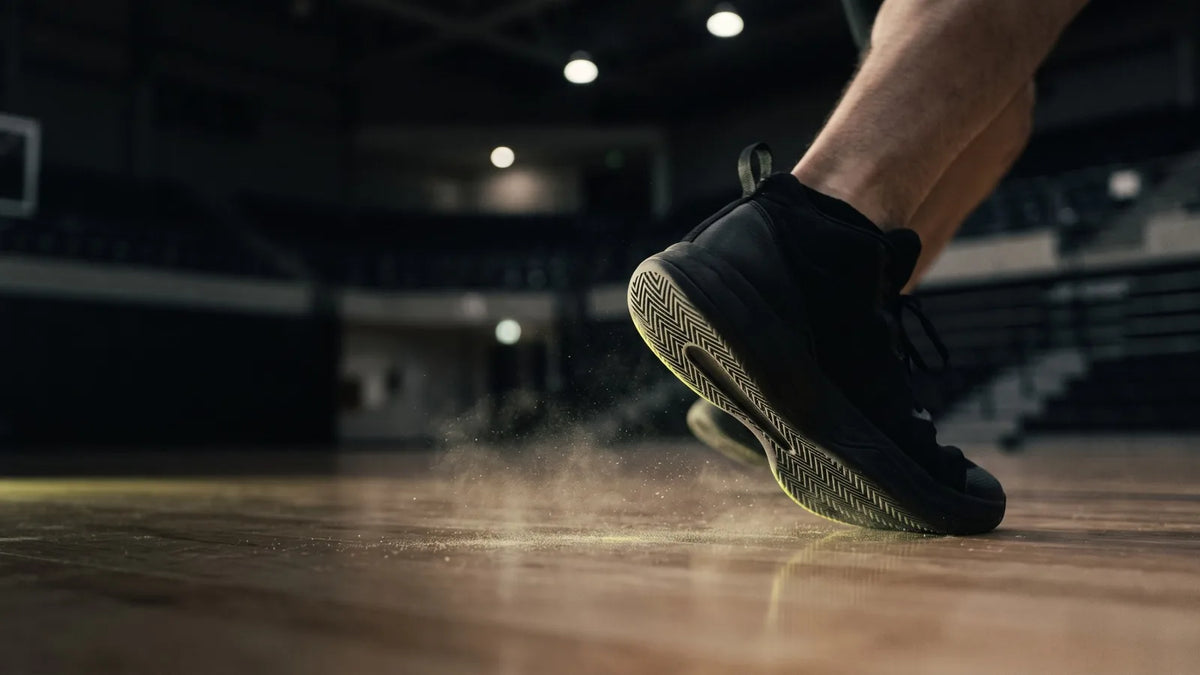
On the night of January 8, 2026, the Miami Heat and the Chicago Bulls never played. Condensation had formed on the floor of the United Center, crews mopped it and dried it with towels, and after a delay of nearly two hours the game was postponed. “We just couldn’t guarantee a safe on-court experience,” referee Sean Wright said, according to the Associated Press. Heat coach Erik Spoelstra said his team runs into the same problem at its practice facility, where “it takes about 15 minutes for it to change.”
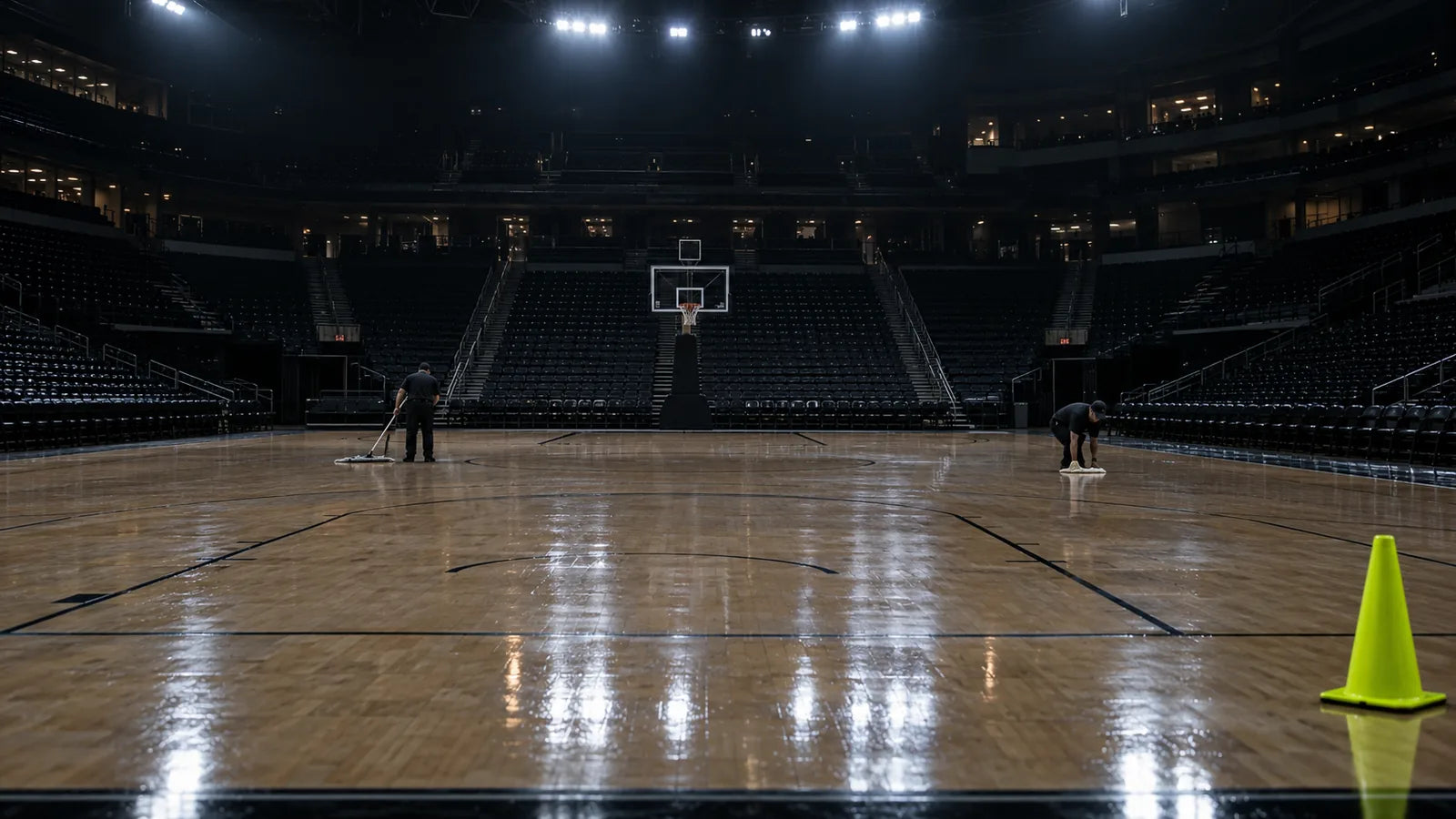
If a professional arena with a professional crew can lose a floor to a thin film of moisture, a rec center on a humid Tuesday night has no chance. Most slips are far less dramatic than a postponed NBA game, and they tend to have the same root cause: something is sitting between the rubber and the floor, or the rubber itself is finished.
This piece looks at what recent research says about grip, what usually gets in the way, and what you can do before your next game. Where we are giving our own opinion instead of a finding, we say so.
What the lab numbers say
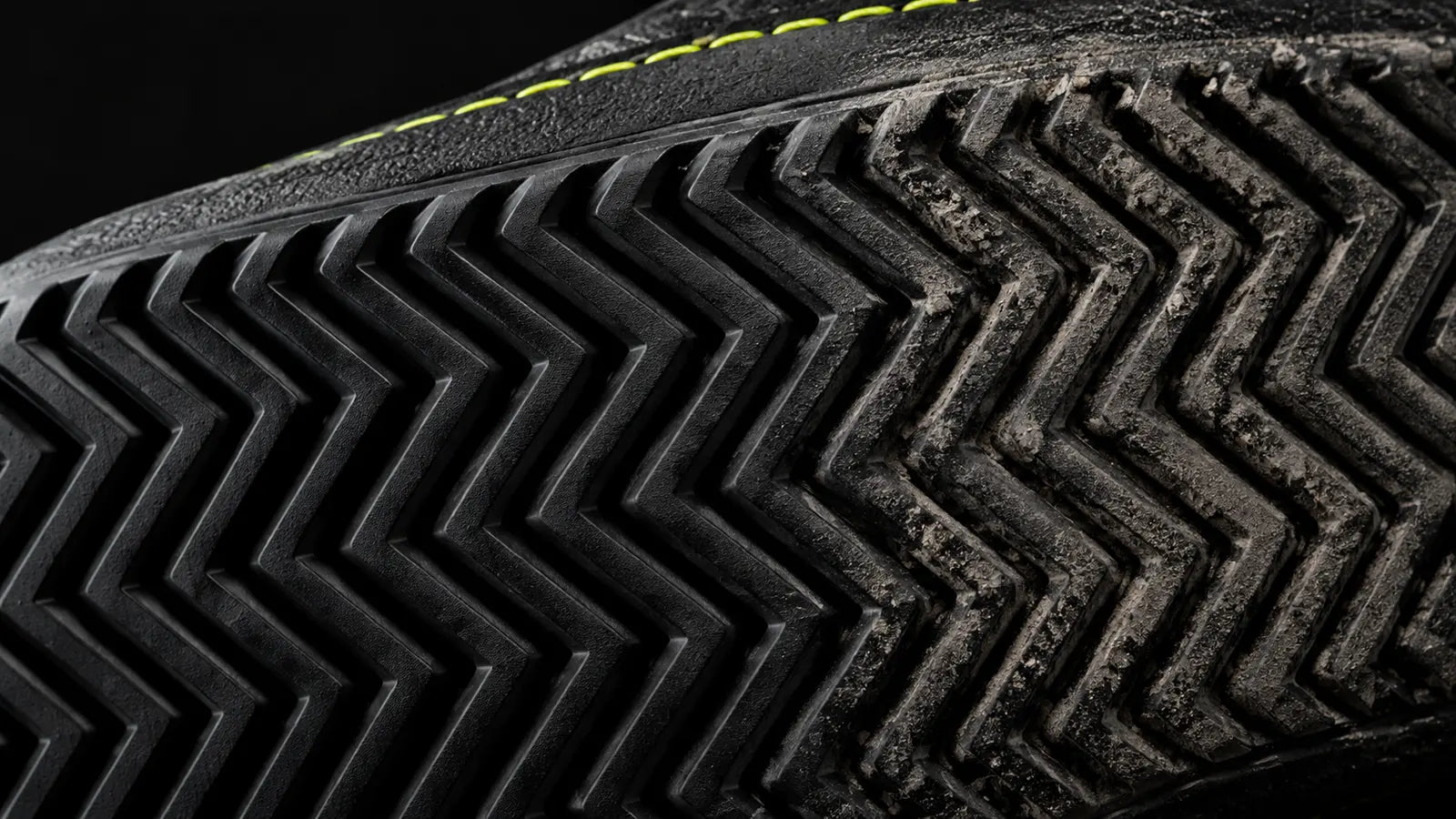
In July 2025, researchers publishing in Applied Mechanics (Yadav, Gupta, Sharma and Chanda) tested fifteen heel tread patterns modelled on commercial basketball shoes. The patterns were cast in polyurethane and run across three kinds of flooring with a slip tester that follows the ASTM F2913-19 standard.
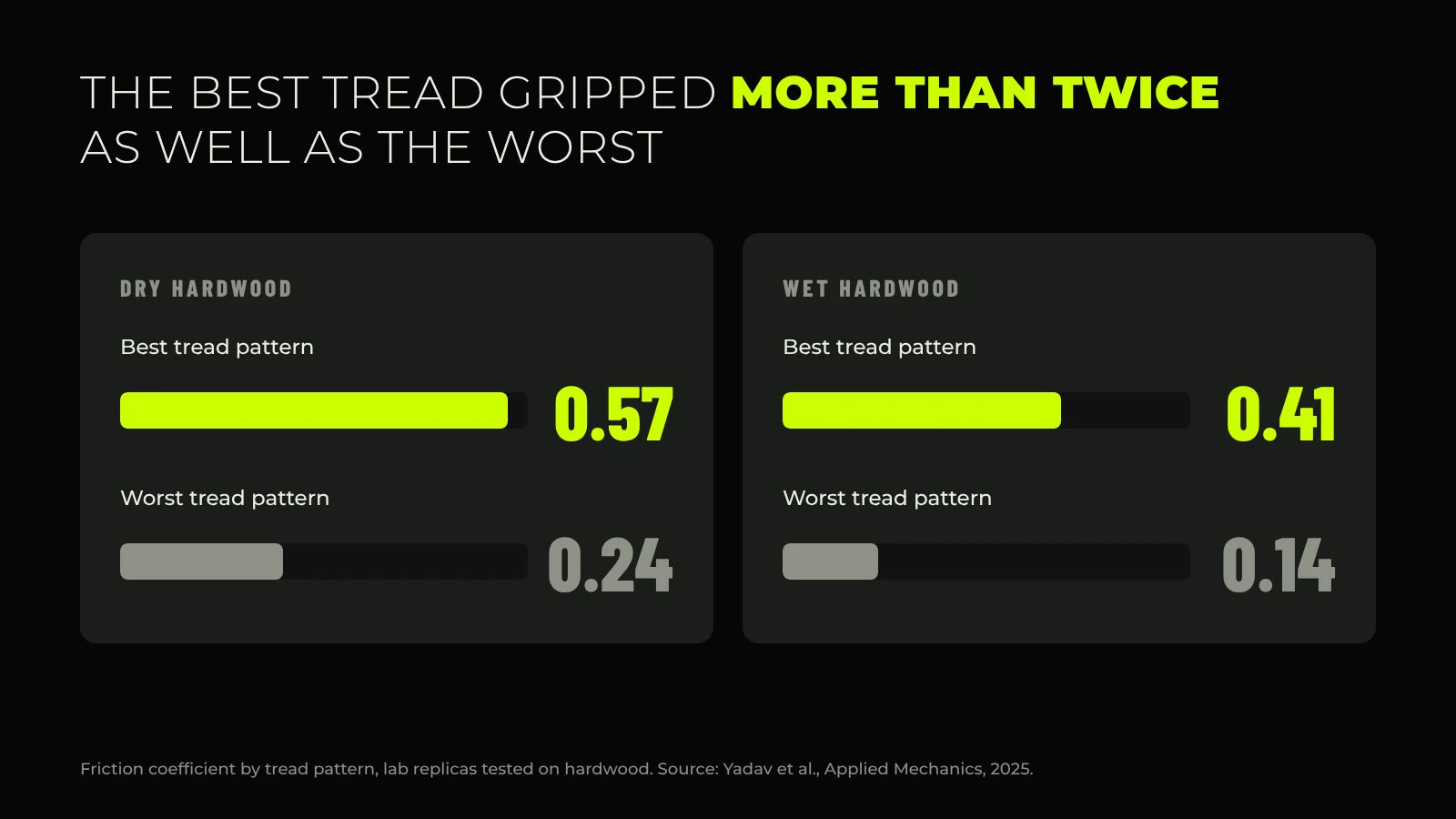
On dry maple hardwood, the coefficient of friction ranged from 0.24 to 0.57 depending on the pattern. With a thin layer of water, the range dropped to 0.14 to 0.41. Hardwood gave better traction than synthetic or polyurethane floors, and herringbone and circular heel patterns came out on top. Only about 60% of the patterns cleared a 0.3 reference value on dry hardwood, and about 40% did when it was wet.
The caveats matter. These were lab replicas, not finished shoes. The test used one load, one speed and one slip angle, and water was the only contaminant, so dust was not part of the experiment. The authors also note that no accepted standard says how much friction a basketball shoe needs.
Still, two things are hard to argue with. The best pattern on dry hardwood produced more than double the friction of the worst one (0.57 against 0.24). And on that same floor, the best pattern fell from 0.57 to 0.41 once it got wet.
What ends up between your shoe and the floor
Flooring contractor John Prater, writing in Wood Floor Business after the slippery courts at the NBA’s 2023 in-season tournament, names three usual causes: dust and what he calls organic soil (sweat, grease and oil), humidity that lets moisture collect on the finish, and a finish worn down by heavy traffic. He notes that dust blows in when outside doors are propped open and settles under bleachers and in expansion gaps, and his advice to facilities is to dust-mop and tack the floor before games.
Prater is a contractor, not a researcher, so read this as a practitioner’s view. It still lines up with what happened in Chicago, and it explains why a court that looks clean can feel slick. A film of dust or moisture is hard to see, and your soles pick it up and carry it with every step.
Our view: soles collect more than the floor does, because they also pick up parking lot grit. Changing into your court shoes at the door is the cheapest way to keep that out of the tread.
Is more grip always better?
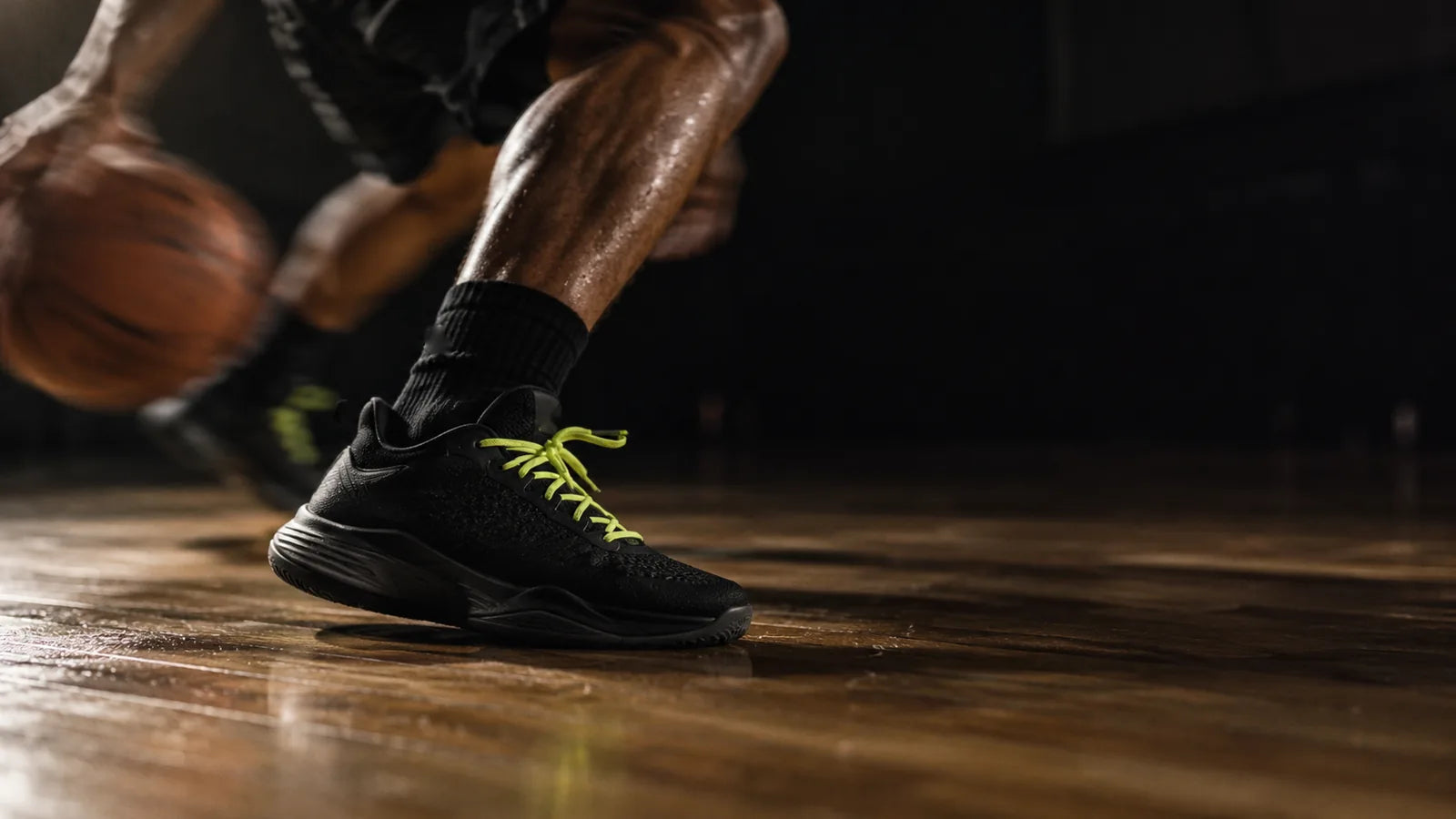
Not necessarily, and a 2024 study in Applied Sciences shows why. Wang and colleagues had twelve varsity players at Jimei University wear three versions of the same shoe, with outsole friction coefficients of 0.8, 1.0 and 1.2, and measured defensive slides, crossover dribbles and approach jumps.
Moving from 0.8 to 1.0 helped. Contact time on the jump got shorter, and impulse and jump height went up. Moving from 1.0 to 1.2 added little. In the crossover, ankle torque rose along with friction, which the authors read as a sign of higher injury risk at higher coefficients. In the lateral defensive slide, the pattern went the other way, with ankle torque falling at higher friction, though the authors point out that pure lateral movement is rare in real games.
They suggest the best value sits somewhere between 1.0 and 1.2 and say more levels need testing. It is a small study of twelve men from one university, so it settles nothing. But it fits our view that the goal is predictable grip, not maximum grip, and it is why we are wary of any trick that leaves a sole tacky.
Why it is worth a minute of your time
Ankle injuries are the most common injuries in men’s and women’s college basketball. A 10-year review of NCAA surveillance data (2004 to 2014) by Tummala and colleagues found that lateral ligament complex tears made up 83.5% of ankle injuries in women and 80.0% in men. Rebounding was the most common activity at the time of injury, at 30.3% and 34.4%.
Between 50.4% and 57.6% of those injuries involved contact, which leaves a large share that did not. Most were treated without surgery (98.5% of women’s and 99.3% of men’s injuries), and 62.7% of women and 65.2% of men were back within a week.
The study did not measure footwear or traction, so it cannot tell us how many of those injuries were slips, and we are not going to pretend it does. What it does show is that a meaningful share of ankle injuries happen without anyone else touching the player. Our reading is that footing belongs on the list of things you check rather than assume. No shoe, spray or routine prevents injuries, and anyone with pain or repeated sprains should see a physical therapist or doctor.
A pre-game routine that takes about a minute
This is our own routine, built on the points above. It has not been tested as a package in any trial.
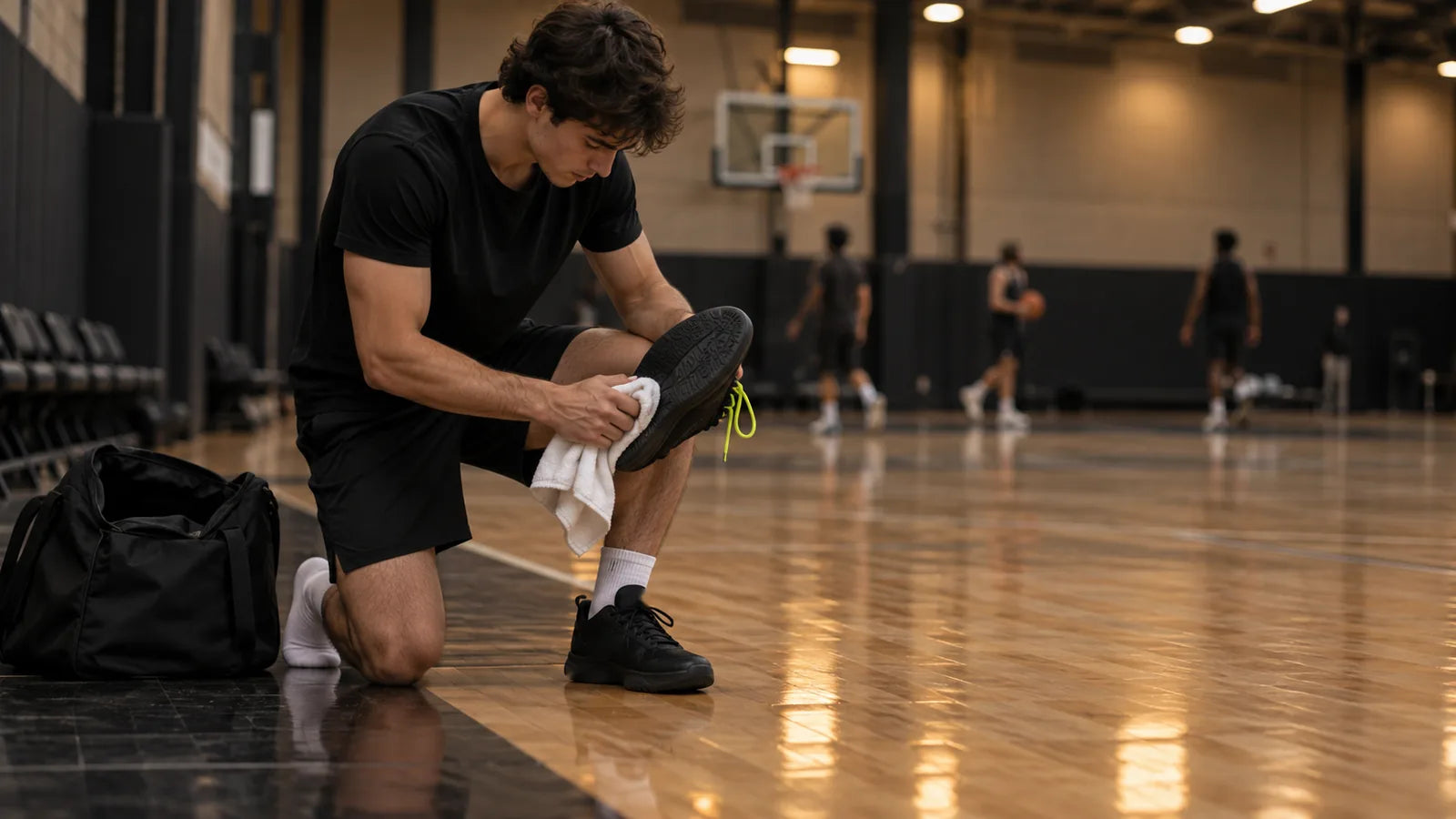
- Flip your shoes over. If the pattern is smooth under the ball of the foot or the heel, the rubber is done, and no amount of cleaning will fix that.
- Brush off loose grit, especially if you walked in from outside.
- Wipe the soles with a damp towel, not a wet one, and do it again during stoppages.
- Take a few hard stops and pivots in warm-ups before you trust the floor. If it feels slick, tell whoever runs the gym. Chicago shows that a slippery floor is not a player problem.
- After the game, let the shoes air out and keep them out of a hot car trunk.
A note on products
We make a 2-in-1 grip and clean spray at MR.KICS, so weigh this accordingly. Our honest take is that a brush and a damp towel get most players most of the way there. If you want something on top of that, look for a product that cleans the outsole and leaves no residue on the sole or the floor. Given the Jimei results, a sticky sole is not the goal.
Frequently asked questions
Why are my shoes slippery on a court that looks clean?
A film of dust or moisture is hard to see. Prater lists dust, organic soil and humidity as the usual causes, and the Chicago game was stopped by condensation on a floor that had been mopped. If the floor is truly fine, check your soles for wear next.
Does tread pattern matter?
It did in the 2025 lab test. Herringbone and circular heel patterns gave the highest traction on dry floors, and the gap between the best and worst pattern on hardwood was more than double. Those were replica soles under lab conditions, so treat it as a strong hint, not a ranking of real shoes.
Can a shoe be too grippy?
The 2024 Jimei study suggests there are diminishing returns, and in one movement, the crossover, higher friction came with higher ankle torque. The authors say the sample was small and more testing is needed.
Made by athletes, for athletes, in Toronto
We build gear and write about what keeps you playing and moving. See what we are up to on our site.
Sources
- Carlson, M. (Associated Press), Heat-Bulls game at the United Center postponed due to condensation on the court, January 9, 2026
- Yadav P., Gupta S., Sharma D., Chanda A., Slip-Resistance Performance of Basketball Shoes Tread Patterns on Common Courts, Applied Mechanics 6(3):54, 2025
- Wang X., Cao K., Bai Y., Wei S., Hu Z., Shan G., Motor control shifts induced by shoe friction adjustments in basketball, Applied Sciences 14(7):2869, 2024
- Tummala S.V., Hartigan D.E., Makovicka J.L., Patel K.A., Chhabra A., 10-Year Epidemiology of Ankle Injuries in Men’s and Women’s Collegiate Basketball, Orthopaedic Journal of Sports Medicine 6(11), 2018
- Prater J., What Really Causes Slippery Basketball Floors?, Wood Floor Business, 2024
About MR.KICS: made by athletes, for athletes, in Toronto, Canada. This article is for general information and is not medical advice.
The images in this article are AI-generated illustrations.